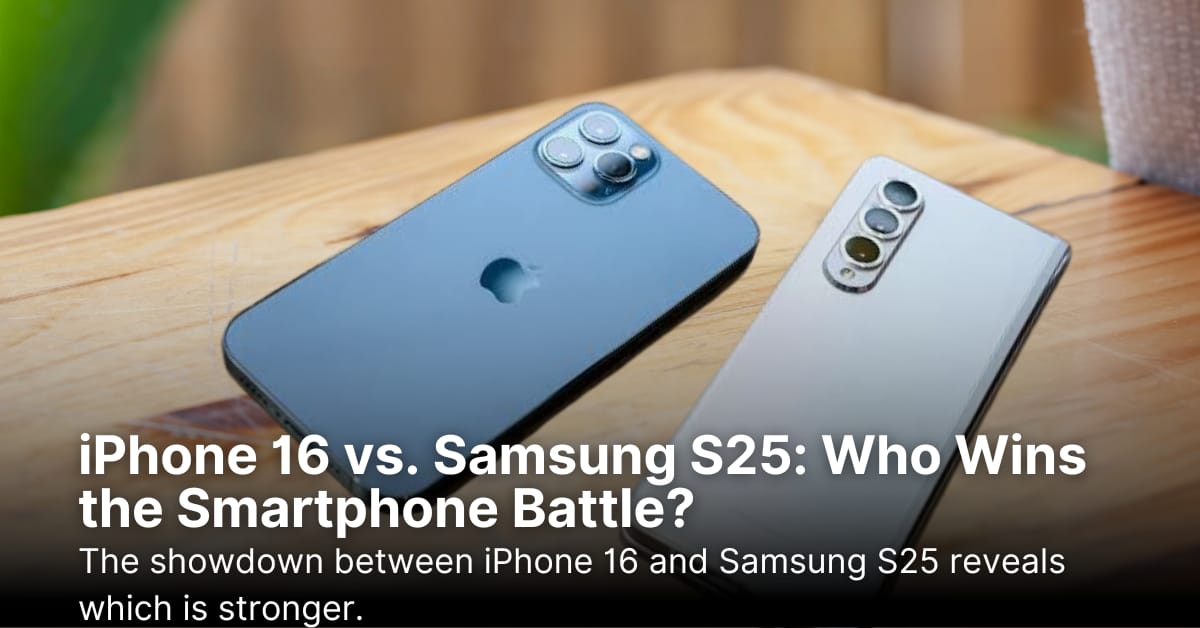
IPHONE • DAILYTECH.ID - The iPhone 16 vs S25 showdown is the ultimate question for anyone planning to upgrade in 2025. Apple and Samsung are the world’s biggest smartphone rivals, and with their latest flagships, the competition is fiercer than ever. Both devices bring powerful performance, stunning displays, and next-generation cameras, but which one actually deserves a spot in your pocket?
We’re going deep into specs, features, and real-world usability to help you decide. From design to performance, photography to battery life, this comparison covers it all. By the end, you’ll know whether the iPhone 16 or Samsung Galaxy S25 is the right fit for you.
Let’s break down the key differences and similarities in a simple side-by-side table before diving into the details.
Read More : iPhone 16 vs. iPhone 16 Pro: Which is Right for You?
iPhone 16 vs S25: Specs at a Glance
| Feature | iPhone 16 | Samsung Galaxy S25 |
|---|---|---|
| Display | 6.1-inch Super Retina XDR OLED | 6.2-inch Dynamic AMOLED 2X |
| Refresh Rate | 120Hz ProMotion | 120Hz Adaptive |
| Processor | A18 Bionic | Snapdragon 8 Gen 4 (Global) |
| RAM | 8GB | 12GB |
| Storage Options | 128GB, 256GB, 512GB, 1TB | 128GB, 256GB, 512GB |
| Cameras (Rear) | Dual 48MP + 12MP | Triple 50MP + 12MP + 10MP |
| Front Camera | 12MP TrueDepth | 12MP |
| Battery Life | 22 hours video playback | 25 hours video playback |
| Charging | 30W wired, 15W MagSafe wireless | 45W wired, 15W wireless |
| Software | iOS 18 | One UI 7 (Android 15) |
| Price (Starting) | $799 | $899 |
Design and Build
Apple stays true to its minimalist design with the iPhone 16, refining the flat edges and introducing new pastel color options. It’s slightly lighter than its predecessor, making it comfortable for one-handed use. The polished aluminum frame gives it a premium feel without being slippery.
Samsung’s Galaxy S25, on the other hand, embraces curves with its slim bezels and near-edge-to-edge display. The matte glass finish feels luxurious, and the S25 comes in bolder color choices, appealing to users who like a bit more personality in their device.
When it comes to durability, both phones are IP68 water- and dust-resistant. However, Samsung uses Gorilla Glass Armor for extra toughness, while Apple relies on Ceramic Shield. Both are reliable, but Samsung’s display feels slightly more resilient against scratches.
Display Experience
The iPhone 16 sports a 6.1-inch Super Retina XDR OLED with ProMotion, giving you buttery-smooth 120Hz scrolling. Colors look natural and accurate, perfect for those who value realism in videos and photos. HDR support is excellent, making streaming content a joy.
The Galaxy S25 edges ahead with its slightly larger 6.2-inch Dynamic AMOLED 2X. Samsung is known for punchier colors and deeper contrasts, and that tradition continues here. With adaptive refresh rate optimization, the S25 saves power when a full 120Hz isn’t needed.
For gaming and binge-watching, Samsung’s display feels more immersive, while Apple delivers more balanced, true-to-life visuals. It really depends on whether you prefer vibrancy or accuracy.
Performance and Power
Apple’s new A18 Bionic chip pushes the iPhone 16 into blazing-fast territory. It handles multitasking effortlessly and shines in graphics-heavy apps like 3D games or video editing. Apple’s tight integration of hardware and software also means iOS 18 feels incredibly smooth, even with just 8GB of RAM.
Samsung equips the S25 with Qualcomm’s Snapdragon 8 Gen 4 globally, paired with 12GB of RAM. The raw performance is impressive, especially for multitasking and running demanding apps simultaneously. It’s a powerhouse for Android enthusiasts who want maximum flexibility.
Benchmark results lean slightly in Apple’s favor for efficiency, while Samsung often scores higher in multitasking performance. If you’re after long-term smoothness and stability, Apple wins. If you want raw customization and power, Samsung takes the crown.
Read More : iPhone 16 vs. iPhone 15: Is It Really Worth the Upgrade?
Camera Showdown
The iPhone 16 features Apple’s new dual-lens system with a 48MP main sensor and a 12MP ultra-wide. Apple leans heavily into computational photography, making it great for point-and-shoot simplicity. Portraits and night shots look consistently excellent without much tweaking.
The Galaxy S25 flexes a triple-lens setup: 50MP wide, 12MP ultra-wide, and 10MP telephoto with 3x optical zoom. Samsung continues to dominate zoom photography and delivers more detail in daylight. However, sometimes images can look oversaturated compared to Apple’s more natural tones.
Selfie lovers will find both 12MP front cameras strong, but Apple’s TrueDepth sensor brings the edge with smoother portrait selfies and Face ID support.
Battery and Charging
Apple improves efficiency with the iPhone 16, offering around 22 hours of video playback. It supports 30W fast charging and 15W MagSafe wireless charging. While not groundbreaking, it’s reliable and consistent for daily use.
Samsung pushes harder here. The S25 boasts up to 25 hours of video playback and 45W fast charging that gets you to 50% in under 25 minutes. Wireless charging is equally fast, making it the better pick for heavy users.
If you’re always on the go, the S25 will likely keep you powered longer. But for moderate users, both phones perform well enough to get you through the day.
Software and Ecosystem
The iPhone 16 runs on iOS 18, bringing tighter integration with Apple’s ecosystem; MacBooks, iPads, AirPods, and Apple Watch all sync seamlessly. Features like Continuity, FaceTime enhancements, and iMessage upgrades make it ideal for users already invested in Apple’s world.
The Galaxy S25 arrives with One UI 7 on top of Android 15. Samsung’s ecosystem has grown, especially with Galaxy Buds, Galaxy Watches, and even foldables. Plus, DeX mode gives you a desktop-like experience when connected to a monitor something Apple doesn’t offer.
The choice here boils down to your digital lifestyle. If you’re deep into Apple’s ecosystem, the iPhone 16 is the obvious choice. If you prefer flexibility and cross-platform freedom, the Galaxy S25 is better suited.
Price and Value
The iPhone 16 starts at $799, keeping it relatively competitive in the flagship market. However, upgrading storage quickly drives up the price. For many, the 128GB base model may feel limiting.
The Galaxy S25 begins at $899 but offers 256GB of storage right out of the box. That makes it better value for those who need extra space without paying more.
If budget is a key factor, the iPhone 16 is technically cheaper, but Samsung’s starting storage makes the higher upfront cost more justified.
FAQs
1. Which phone has the better camera, the iPhone 16 or Samsung S25?
The iPhone 16 delivers more natural and consistent photos, while the S25 excels at zoom and detail but sometimes oversaturates colors.
2. Does the Samsung S25 support faster charging than the iPhone 16?
Yes. The S25 supports 45W wired charging, compared to the iPhone 16’s 30W.
3. Which is better for gaming, iPhone 16 or S25?
Both perform exceptionally well, but Apple’s A18 chip is slightly more efficient, while Samsung’s extra RAM helps with multitasking-heavy games.
4. Is the iPhone 16 cheaper than the S25?
Yes. The iPhone 16 starts at $799, while the Galaxy S25 starts at $899, though Samsung includes more base storage.
5. Which ecosystem is more versatile, Apple’s or Samsung’s?
Apple’s ecosystem is seamless if you already use other Apple devices. Samsung’s is more flexible, especially with Windows integration and DeX.
Read More : Pixel 9 vs. iPhone 16: The Ultimate Flagship Showdown
Conclusion
Choosing between the iPhone 16 and Samsung Galaxy S25 comes down to your lifestyle and priorities:
- iPhone 16: Best for seamless ecosystem, smooth performance, and natural photography.
- Samsung S25: Better for battery life, charging speed, and versatile features.
- Both are durable, premium, and future-proof, so you can’t go wrong.
- Price-wise, iPhone 16 is cheaper upfront, while S25 gives you more storage for the cost.
- Your decision depends on whether you value Apple’s simplicity or Samsung’s flexibility.