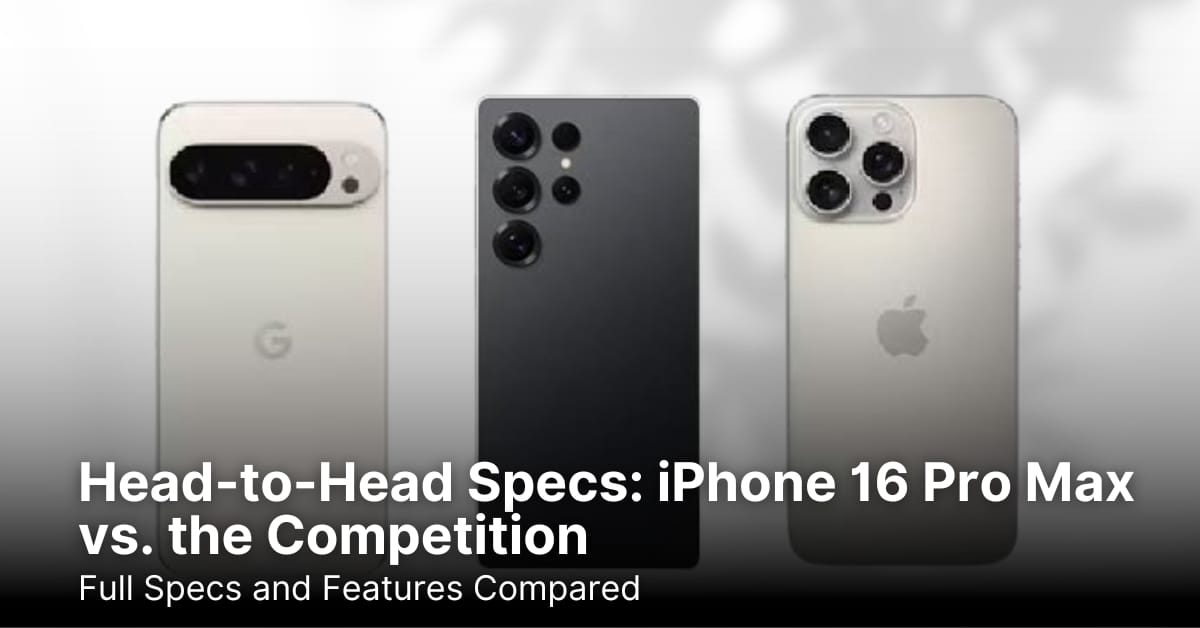
IPHONE • DAILYTECH.ID - The iPhone 16 Pro Max comparison is one of the most exciting discussions this year. Apple’s biggest phone is packed with power, but how does it hold up when stacked against rival flagships? With so many premium devices competing for your pocket, it’s only fair to see if the Pro Max truly stands above the rest.
This iPhone 16 Pro Max comparison will help you cut through the noise by focusing on the specs that matter most. From display brilliance and battery endurance to performance and camera upgrades, we’ll weigh Apple’s latest against its strongest competitors.
So, whether you’re already leaning toward Apple or just exploring your options, let’s dive into the details that separate the iPhone 16 Pro Max from its toughest challengers on the market.
Read More : iPhone 16 vs. iPhone 16 Plus: What Are the Key Differences?
iPhone 16 Pro Max vs. The Competition: At a Glance
Here’s a quick look at how the iPhone 16 Pro Max compares with leading rivals like the Samsung Galaxy S25 Ultra, Google Pixel 9 Pro XL, and OnePlus 13 Pro.
| Feature | iPhone 16 Pro Max | Samsung Galaxy S25 Ultra | Google Pixel 9 Pro XL | OnePlus 13 Pro |
|---|---|---|---|---|
| Display | 6.9″ Super Retina XDR OLED, 120Hz | 6.9″ Dynamic AMOLED 2X, 120Hz | 6.8″ LTPO OLED, 120Hz | 6.8″ AMOLED, 120Hz |
| Processor | A18 Pro chip | Snapdragon 8 Gen 4 | Google Tensor G4 | Snapdragon 8 Gen 4 |
| RAM | 8GB | 12/16GB | 16GB | 12/16/24GB |
| Storage | 256GB–1TB | 256GB–1TB | 128GB–1TB | 256GB–1TB |
| Cameras | 48MP + 48MP + 12MP + LiDAR | 200MP + 12MP + 10MP + 50MP | 50MP + 48MP + 48MP | 50MP + 48MP + 32MP |
| Battery | 4,500mAh, 30W fast charging | 5,000mAh, 45W fast charging | 5,000mAh, 30W fast charging | 6,000mAh, 100W fast charging |
| OS | iOS 18 | Android 15 | Android 15 | Android 15 |
| Price (Starting) | $1,199 | $1,299 | $999 | $899 |
Design and Build Quality
Apple continues its tradition of premium craftsmanship with the iPhone 16 Pro Max, boasting a titanium frame that makes the device lighter yet more durable. The slightly slimmer bezels give the display a more immersive edge-to-edge look. It also maintains Apple’s clean, minimalist design with flat edges and familiar finishes.
By contrast, the Samsung Galaxy S25 Ultra pushes bold design with squared edges and a built-in S Pen. The Pixel 9 Pro XL leans toward a sleek but recognizable horizontal camera bar, while the OnePlus 13 Pro opts for a slightly curved frame that feels more futuristic.
If you’re after a luxury feel with incredible attention to detail, the iPhone 16 Pro Max is still hard to beat. But if standout design is what sways you, Samsung and Google might pull your eye.
Display and Visual Experience
Apple’s 6.9-inch Super Retina XDR OLED screen remains a showstopper. With ProMotion technology, it adjusts refresh rates up to 120Hz for buttery-smooth scrolling. HDR content looks stunning thanks to ultra-high peak brightness levels, making outdoor visibility one of the best in the industry.
Samsung counters with its 6.9-inch Dynamic AMOLED 2X panel, often considered the gold standard in brightness and sharpness. Meanwhile, the Pixel 9 Pro XL delivers excellent color accuracy, while the OnePlus 13 Pro balances performance with value.
For those who prioritize streaming, gaming, and everyday clarity, the iPhone 16 Pro Max holds its ground firmly at the top tier, but Samsung edges it out slightly in sheer brightness and contrast.
Performance and Processing Power
The iPhone 16 Pro Max runs on Apple’s A18 Pro chip, built for blazing speed and efficiency. Multitasking, gaming, and even advanced AI tasks run seamlessly thanks to this chip’s custom design and integration with iOS 18. Benchmarks show the A18 Pro pulling ahead of Snapdragon’s Gen 4, especially in single-core performance.
That said, Android rivals like the S25 Ultra and OnePlus 13 Pro benefit from higher RAM options (up to 16GB), which helps with multitasking and heavy app usage. Google’s Tensor G4, while optimized for AI, doesn’t quite match Apple’s raw horsepower but brings unique machine learning features.
If you want raw, consistent performance with no lag, Apple is still king. But if you’re a power user who loves multitasking with dozens of apps open, Android’s higher RAM offerings give them an edge.
Read More : Should You Wait for the iPhone 17? Comparing It to the iPhone 16
Camera Systems and Photography
The iPhone 16 Pro Max continues Apple’s mastery in photography with its triple-lens setup: a 48MP main sensor, a 48MP telephoto, and a 12MP ultrawide, backed by LiDAR. Its improved night mode, 5x optical zoom on the Pro Max exclusive, and next-gen Smart HDR make it perfect for both casual snaps and pro-level content creation.
Samsung’s 200MP sensor is a spec beast, offering mind-blowing detail, but real-world results don’t always match Apple’s natural tones. Google’s Pixel 9 Pro XL shines in computational photography, excelling at portraits and low-light performance. The OnePlus 13 Pro balances things well but doesn’t quite match the refinement of Apple or Google.
If you want the most consistent, reliable camera system across all conditions, the iPhone 16 Pro Max is still the go-to. For raw resolution, Samsung takes the prize, and for software magic, Google is unbeatable.
Battery Life and Charging
Apple boosted the iPhone 16 Pro Max’s battery to around 4,500mAh, which comfortably lasts through a full day of heavy use. iOS 18’s efficiency gains also extend longevity, but Apple’s charging speed remains slower than competitors, 30W wired and 20W MagSafe wireless.
Samsung’s 5,000mAh battery with 45W charging is more versatile, while OnePlus outpaces everyone with a massive 100W wired charging option, refueling in under 30 minutes. Google sticks to a safe 30W but lags behind in sheer speed.
For all-day reliability, Apple delivers. But if you care about lightning-fast charging, OnePlus takes the crown.
Software and Ecosystem
What sets the iPhone 16 Pro Max apart isn’t just hardware, it’s the iOS ecosystem. iOS 18 introduces more AI-driven personalization, enhanced widgets, and deeper integration across Apple devices. If you already own a MacBook, iPad, or Apple Watch, the seamless continuity is unmatched.
Samsung and OnePlus both offer customization and flexibility with Android 15, while Google leans into AI tools like live translation and advanced assistant features. But none can match the polish and longevity of Apple’s software support, which often stretches five to six years.
For long-term reliability and effortless syncing across devices, Apple remains the safest bet.
Price and Value for Money
At $1,199 starting, the iPhone 16 Pro Max is a premium investment. Samsung’s S25 Ultra is slightly pricier at $1,299, while the Pixel 9 Pro XL undercuts with $999, and OnePlus makes the most wallet-friendly case at $899.
The Pro Max justifies its price with superior build, performance, and ecosystem perks. However, if you’re looking for cutting-edge specs at a lower cost, OnePlus and Pixel offer tremendous value.
FAQs
1. Is the iPhone 16 Pro Max worth upgrading from the iPhone 15 Pro Max?
Yes. The A18 Pro chip, upgraded cameras, and slimmer design make it a meaningful leap for power users.
2. How does the iPhone 16 Pro Max compare to Samsung’s Galaxy S25 Ultra for photography?
Samsung offers higher resolution, but Apple provides more consistent, natural-looking shots across all conditions.
3. Does the iPhone 16 Pro Max have better battery life than Android rivals?
It lasts all day comfortably but charges slower. OnePlus and Samsung lead in charging speeds.
4. Which phone has the best display—iPhone 16 Pro Max or Galaxy S25 Ultra?
Both are excellent, but Samsung edges ahead with higher peak brightness.
5. How long will the iPhone 16 Pro Max receive software updates?
Apple typically supports iPhones for 5–6 years, longer than most Android competitors.
Read More : A Detailed Comparison of iPhone 16 Pro and iPhone 16
Conclusion
- The iPhone 16 Pro Max shines with unbeatable performance, refined cameras, and seamless iOS integration.
- Samsung brings jaw-dropping specs, especially in display and camera resolution.
- Google delivers smart AI-driven photography and software tools.
- OnePlus wins on charging speed and affordability.
- Ultimately, your choice depends on whether you value Apple’s ecosystem, Android’s flexibility, or raw specs for the price.