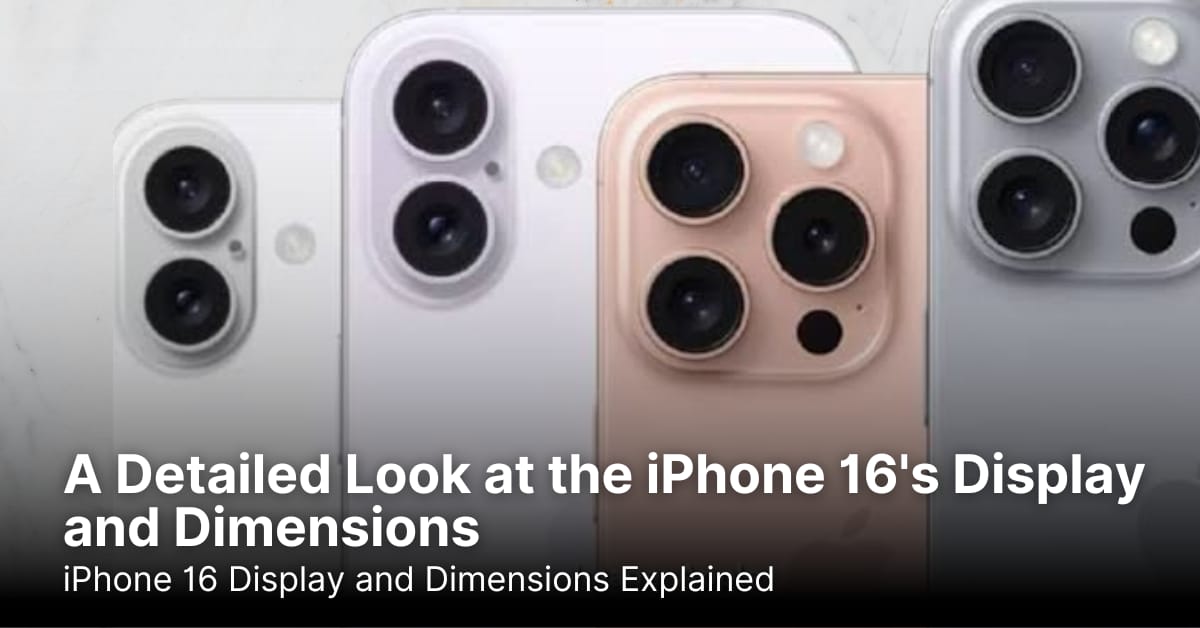
IPHONE • DAILYTECH.ID - When it comes to Apple’s latest flagship, the iPhone 16 display is one of the most exciting features to explore. Apple continues to raise the bar by blending sleek design with groundbreaking screen technology. Whether you’re interested in size, brightness, or how it feels in your hand, the iPhone 16 offers noticeable refinements that deserve a closer look.
Beyond just aesthetics, the iPhone 16 display plays a major role in performance, impacting battery life, viewing experience, and even productivity. If you’re someone who streams, games, or works directly on your phone, this upgrade matters more than you think.
In this article, we’ll dive deep into the iPhone 16’s display specifications, screen quality, dimensions, and how it compares to previous models. Plus, we’ll answer some of the most common questions so you can decide if this is the right device for your lifestyle.
Read More : iPhone 16 Camera: Everything You Need to Know About the Upgrades
iPhone 16 Display and Dimensions at a Glance
| Feature | iPhone 16 | iPhone 15 | iPhone 16 Pro | iPhone 15 Pro |
|---|---|---|---|---|
| Display Size | 6.1 inches | 6.1 inches | 6.3 inches | 6.1 inches |
| Display Type | Super Retina XDR OLED | Super Retina XDR OLED | Super Retina XDR OLED | Super Retina XDR OLED |
| Refresh Rate | 60Hz | 60Hz | 120Hz | 120Hz |
| Brightness (Peak HDR) | 2,000 nits | 2,000 nits | 2,000 nits | 2,000 nits |
| Dimensions (mm) | 147.6 x 71.6 x 7.8 | 147.6 x 71.6 x 7.8 | 149.6 x 71.5 x 8.25 | 146.6 x 70.6 x 8.25 |
| Weight | 170g | 171g | 199g | 187g |
| Bezels | Slimmer | Slightly thicker | Slimmest ever | Slimmer |
| Material | Aluminum & Ceramic Shield | Aluminum & Ceramic Shield | Titanium & Ceramic Shield | Titanium & Ceramic Shield |
Design Evolution and Size Improvements
Apple is known for making subtle, meaningful changes rather than drastic shifts, and the iPhone 16 is a prime example. At first glance, the dimensions are almost identical to the iPhone 15. However, the difference lies in how the phone feels. Slimmer bezels mean you get a more immersive screen without increasing the overall size of the device.
This is particularly handy for people who prefer compact phones that are easy to use with one hand. The iPhone 16 retains the 6.1-inch form factor for the standard model and 6.3 inches for the Pro, but the slimmer borders make the screen feel slightly larger in practice.
On the Pro model, Apple has shaved down bezels to the thinnest ever seen on an iPhone. This not only makes the display stand out but also reduces the visual “bulk” of the device, making it look and feel sleeker.
Screen Technology: Brighter, Smarter, and More Efficient
The core of the iPhone 16 display is its Super Retina XDR panel, which remains one of the sharpest OLED screens on the market. With rich colors, deep blacks, and HDR support, watching movies or editing photos looks phenomenal.
Apple has also pushed brightness levels further. The Pro models can now reach up to 2,000 nits in peak HDR brightness, an incredible feat for outdoor visibility. This means you’ll have no trouble reading your screen under direct sunlight, a common complaint for many smartphone users.
Efficiency plays a big role too. Despite higher brightness, the display consumes less power thanks to Apple’s new power management system. That directly translates into longer battery life without compromising performance.
Refresh Rate and Motion Smoothness
While the standard iPhone 16 sticks to a 60Hz refresh rate, the Pro models continue to shine with ProMotion technology, offering adaptive refresh rates up to 120Hz. This makes scrolling, gaming, and animations appear buttery smooth.
If you’re upgrading from an older model with 60Hz, you’ll notice an immediate difference on the Pro versions. Whether you’re browsing social media or playing fast-paced games, the fluidity is unmatched.
The adaptive refresh also helps save power by scaling down to as low as 1Hz when viewing static content, like reading text or checking notifications.
Read More : Is the iPhone 16 AI-Powered? A Deep Dive into Its New Features
Dimensions and Weight: Subtle But Noticeable
When comparing the iPhone 16 and iPhone 15, the measurements are nearly identical. But the weight difference, though minimal, can be felt. The standard iPhone 16 weighs slightly more than its predecessor due to material refinements, while the Pro version is lighter compared to older stainless-steel Pro models thanks to its titanium build.
For daily use, these small differences add up. Holding the Pro for long periods, such as during gaming or video calls, feels more comfortable thanks to its reduced weight and improved balance.
Durability and Materials
Apple continues to use Ceramic Shield glass on the front, which is tougher than most smartphone glass options. On the back, the Pro models stand out with titanium frames, offering both strength and lightness. The standard iPhone 16 keeps its aluminum body, which still feels premium and sturdy.
This combination ensures the display is well-protected against scratches and accidental drops, while maintaining a luxurious feel.
User Experience with the Display
The upgrades to the iPhone 16 display aren’t just numbers on paper,they affect how you use your phone daily. Streaming Netflix in HDR looks sharper, FaceTime calls feel more lifelike, and even casual web browsing benefits from the improved clarity and brightness.
Gamers, in particular, will love the Pro’s 120Hz refresh rate paired with the new A18 chip for ultra-smooth gameplay. On the other hand, casual users of the standard model will still enjoy a crisp and vibrant display that holds up well against competitors.
FAQs
1. Is the iPhone 16 display bigger than the iPhone 15?
Not exactly. The display size remains 6.1 inches for the standard model and 6.3 inches for the Pro, but slimmer bezels make it feel larger.
2. Does the iPhone 16 have ProMotion on all models?
No. Only the iPhone 16 Pro and Pro Max include ProMotion with up to 120Hz refresh rates. The standard model stays at 60Hz.
3. How bright does the iPhone 16 display get?
The standard model reaches 2,000 nits peak HDR brightness, while the Pro models push up to 2,500 nits, perfect for outdoor use.
4. Are the iPhone 16 dimensions different from the iPhone 15?
They’re nearly identical, but the bezels are slimmer, making the screen-to-body ratio better and the phone slightly sleeker.
5. What materials protect the iPhone 16 display?
Apple uses Ceramic Shield for the front glass on all models, with aluminum frames for the standard versions and titanium for the Pro models.
Read More : iPhone 16 Battery Life Review: Is it Better Than Last Year?
Conclusion
- The iPhone 16 display offers slimmer bezels for a more immersive feel without changing screen size.
- Pro models stand out with ProMotion 120Hz and record-breaking 2,000 nits brightness.
- Dimensions remain close to the iPhone 15, but design refinements make the phone sleeker.
- Ceramic Shield and titanium (Pro models) improve durability and comfort in hand.
- Whether you choose the standard or Pro, the display experience is one of the strongest reasons to upgrade.