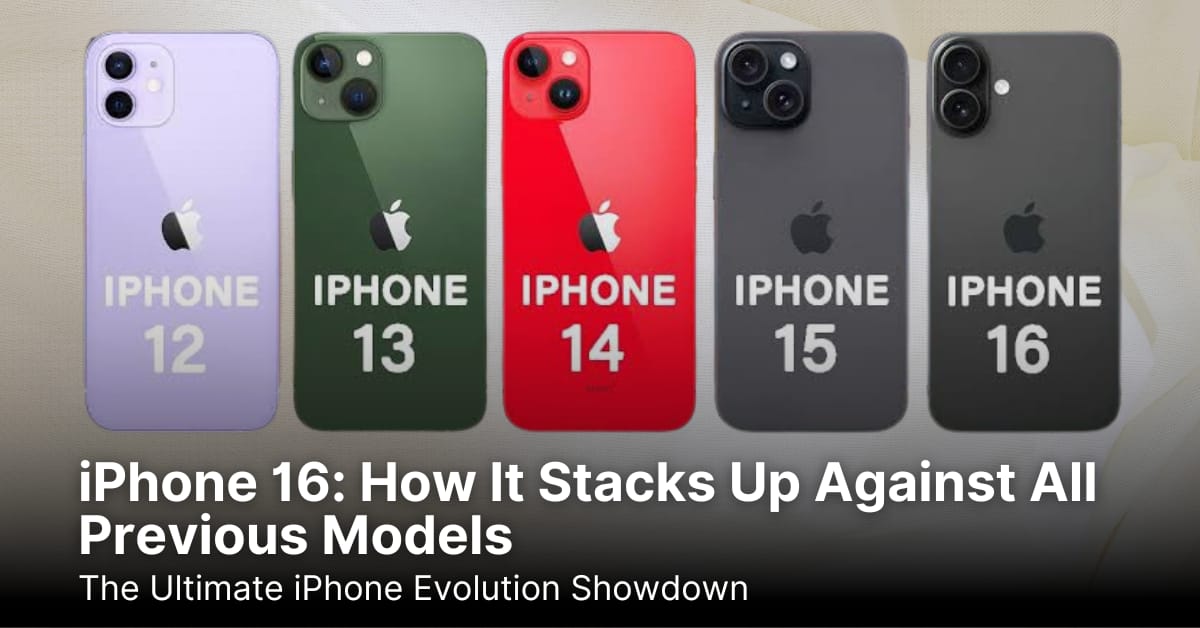
IPHONE • DAILYTECH.ID - The iPhone 16 comparison against past generations is one of the most exciting discussions among Apple fans right now. Each year, Apple promises meaningful upgrades, but not every model brings dramatic changes. So how does the iPhone 16 really compare to its predecessors?
In this guide, we’ll break down everything ; from design, display, and performance to camera and battery life. Whether you’re holding on to an older iPhone or deciding between last year’s model and the newest release, this iPhone 16 comparison will give you the clarity you need.
Let’s dive straight into the details with a full side-by-side look at how the iPhone 16 stacks up against earlier models.
Read More : Should You Wait for the iPhone 17? Comparing It to the iPhone 16
iPhone 16 vs Previous Models: Quick Spec Comparison
| Feature | iPhone 16 | iPhone 15 | iPhone 14 | iPhone 13 | iPhone 12 | iPhone 11 | iPhone X/XS | iPhone 8 |
|---|---|---|---|---|---|---|---|---|
| Display | 6.1” Super Retina XDR, 2000 nits peak | 6.1” Super Retina XDR, 2000 nits peak | 6.1” OLED, 1200 nits peak | 6.1” OLED, 800 nits peak | 6.1” OLED, HDR10 | 6.1” LCD Liquid Retina | 5.8” OLED HDR | 4.7” LCD Retina |
| Processor | A18 Bionic | A16 Bionic | A15 Bionic | A15 Bionic | A14 Bionic | A13 Bionic | A11 Bionic | A11 Bionic |
| Camera (Main) | 48MP Main + 12MP Ultra Wide | 48MP Main + 12MP Ultra Wide | 12MP Dual | 12MP Dual | 12MP Dual | 12MP Dual | 12MP | 12MP |
| Front Camera | 12MP with TrueDepth | 12MP | 12MP | 12MP | 12MP | 12MP | 7MP | 7MP |
| Battery Life | Up to 23 hours video | Up to 20 hours video | Up to 19 hours | Up to 19 hours | Up to 17 hours | Up to 17 hours | Up to 14 hours | Up to 13 hours |
| Connectivity | 5G + Wi-Fi 7 | 5G + Wi-Fi 6E | 5G + Wi-Fi 6 | 5G + Wi-Fi 6 | 5G + Wi-Fi 6 | 4G LTE | 4G LTE | 4G LTE |
| Build Material | Aluminum + Ceramic Shield | Aluminum + Ceramic Shield | Aluminum + Ceramic Shield | Aluminum + Ceramic Shield | Aluminum + Ceramic Shield | Aluminum + Glass | Stainless Steel/Glass | Aluminum/Glass |
| OS at Launch | iOS 18 | iOS 17 | iOS 16 | iOS 15 | iOS 14 | iOS 13 | iOS 11 | iOS 11 |
Design Evolution: Familiar Yet More Refined
Apple has kept the flat-edged design since the iPhone 12, and the iPhone 16 continues this trend but with slightly slimmer bezels and improved durability. The Ceramic Shield glass feels tougher, and the aluminum frame is lighter but more rigid. Compared to earlier models like the iPhone 11 or iPhone 8, the modern design feels much more premium and immersive.
The color options also evolve with every generation. The iPhone 16 introduces fresh pastel finishes, giving it a youthful edge while maintaining that Apple elegance. Holding an iPhone 16 next to an iPhone X or 8 makes it clear how far Apple’s industrial design language has matured.
And let’s not forget size. Apple settled on 6.1 inches for the standard line, striking a balance between comfort and display real estate. If you’ve been using an older compact model like the iPhone 8, this will feel like a big leap, but one that makes everything from reading to gaming much more enjoyable.
Display: Brighter, Sharper, and More Immersive
When comparing displays, the jump from LCD to OLED was the biggest milestone back with the iPhone X. Now, with the iPhone 16, we’re looking at a Super Retina XDR OLED panel that peaks at 2000 nits brightness, double what you got from an iPhone 13 or earlier. This means outdoor visibility is no longer a problem, even under direct sunlight.
The difference is also noticeable in refresh rate and HDR performance. If you’re upgrading from an iPhone 11 or older, you’ll see richer colors, deeper blacks, and much smoother animations. The iPhone 16 isn’t just brighter; it feels alive, making everything from YouTube to HDR movies pop with cinematic quality.
In practical use, you’ll notice less eye strain, sharper details in photos, and overall smoother scrolling. Once you experience it, going back to older screens is tough.
Performance: The Power of A18 Bionic
Apple’s chip progression is one of the clearest ways to see real growth over the years. The iPhone 16 introduces the A18 Bionic, which not only outperforms last year’s A16 but also crushes chips from models as recent as the iPhone 13 or 12.
This new processor is built with AI-powered enhancements, which means smarter photo processing, faster predictive text, and smoother multitasking. Games load quicker, and high-performance apps like video editing tools run seamlessly without overheating.
If you’re coming from an iPhone X or 8, the jump in speed feels jaw-dropping. Apps open instantly, lag is virtually nonexistent, and even long-term performance doesn’t slow down as quickly thanks to Apple’s efficiency improvements.
Read More : A Detailed Comparison of iPhone 16 Pro and iPhone 16
Camera Upgrades: The 48MP Era
The iPhone 16 continues Apple’s transition into high-megapixel photography with its 48MP main sensor, paired with a 12MP ultra-wide camera. The leap from older 12MP-only systems is dramatic. Photos now capture incredible detail, even when cropped or zoomed.
Low-light performance is where the improvement shines most. Compared to the iPhone 12 or earlier, night shots look brighter, sharper, and more natural. The enhanced Smart HDR 5 ensures balanced colors, even in tricky lighting conditions.
Video recording has also leveled up. While the iPhone 11 introduced 4K video recording, the iPhone 16 takes stabilization, dynamic range, and cinematic effects to new heights. If you’re into content creation, this model will feel like a professional tool in your pocket.
Battery Life and Charging
Battery life has steadily improved across generations, and the iPhone 16 pushes it further with up to 23 hours of video playback. That’s 3–4 more hours compared to the iPhone 14 and nearly double what older models like the iPhone 8 could deliver.
Charging is still MagSafe-based, but now with faster wireless speeds and improved efficiency. If you’ve been frustrated with short battery life in older models, this alone might make the upgrade worth it.
For heavy users, think gaming, streaming, or shooting lots of video, the difference in endurance between an iPhone 16 and an iPhone 11 or earlier is night and day.
Connectivity and Software Experience
Connectivity is another huge leap when comparing the iPhone 16 to past models. With Wi-Fi 7 and advanced 5G support, your browsing and streaming speeds are blazing fast. Going back to a 4G LTE device like the iPhone 8 or iPhone X feels painfully slow in comparison.
On the software side, iOS 18 introduces deeper AI integration, smarter Siri features, and improved customization options. The experience feels far ahead of older models that can’t run the latest OS. Not only do you get a smoother phone, but you also get long-term support that ensures your device stays relevant for years.
FAQs About the iPhone 16 Comparison
1. Is the iPhone 16 worth upgrading from the iPhone 15?
If you want better battery life, faster performance with the A18 chip, and enhanced AI features, the upgrade is noticeable. Otherwise, the differences are moderate.
2. How big is the leap from an iPhone 12 to the iPhone 16?
Huge. You’ll notice brighter displays, much better cameras, faster 5G and Wi-Fi 7, plus a big boost in speed and battery life.
3. Does the iPhone 16 camera outperform the iPhone 14 Pro?
The iPhone 14 Pro still has a strong camera, but the iPhone 16 benefits from improved processing and AI, giving it an edge in low-light and HDR performance.
4. How long will Apple support the iPhone 16 with updates?
Typically, Apple supports iPhones for about 5–6 years. You can expect iOS updates well into the next half-decade.
5. Is the iPhone 16 smaller or lighter than past models?
It’s roughly the same size as recent models like the iPhone 15 but lighter and slimmer compared to older ones such as the iPhone 11.
Read More : Head-to-Head Specs: iPhone 16 Pro Max vs. the Competition
Conclusion: Should You Upgrade to iPhone 16?
- The design is sleeker, with brighter, more durable displays.
- The A18 chip ensures unmatched speed and efficiency.
- Camera improvements deliver pro-level photography and video.
- Battery life outlasts older iPhones by hours.
- Future-proof connectivity with Wi-Fi 7 and advanced 5G makes it ready for years ahead.
If you’re on an iPhone 12 or earlier, the jump feels massive. For iPhone 13 or 14 owners, the improvements are more incremental but still worth considering if you value performance and camera upgrades.